
‘Without change, there can be no improvement.’
Mark Fox, an experienced British educator, has been our new headteacher at our Education Campus since the beginning of August. Now is the perfect time to chat to him about his first impressions, his priorities, and his views on the role of a headteacher.
Mark, you’ve only just arrived. How were your first few days?
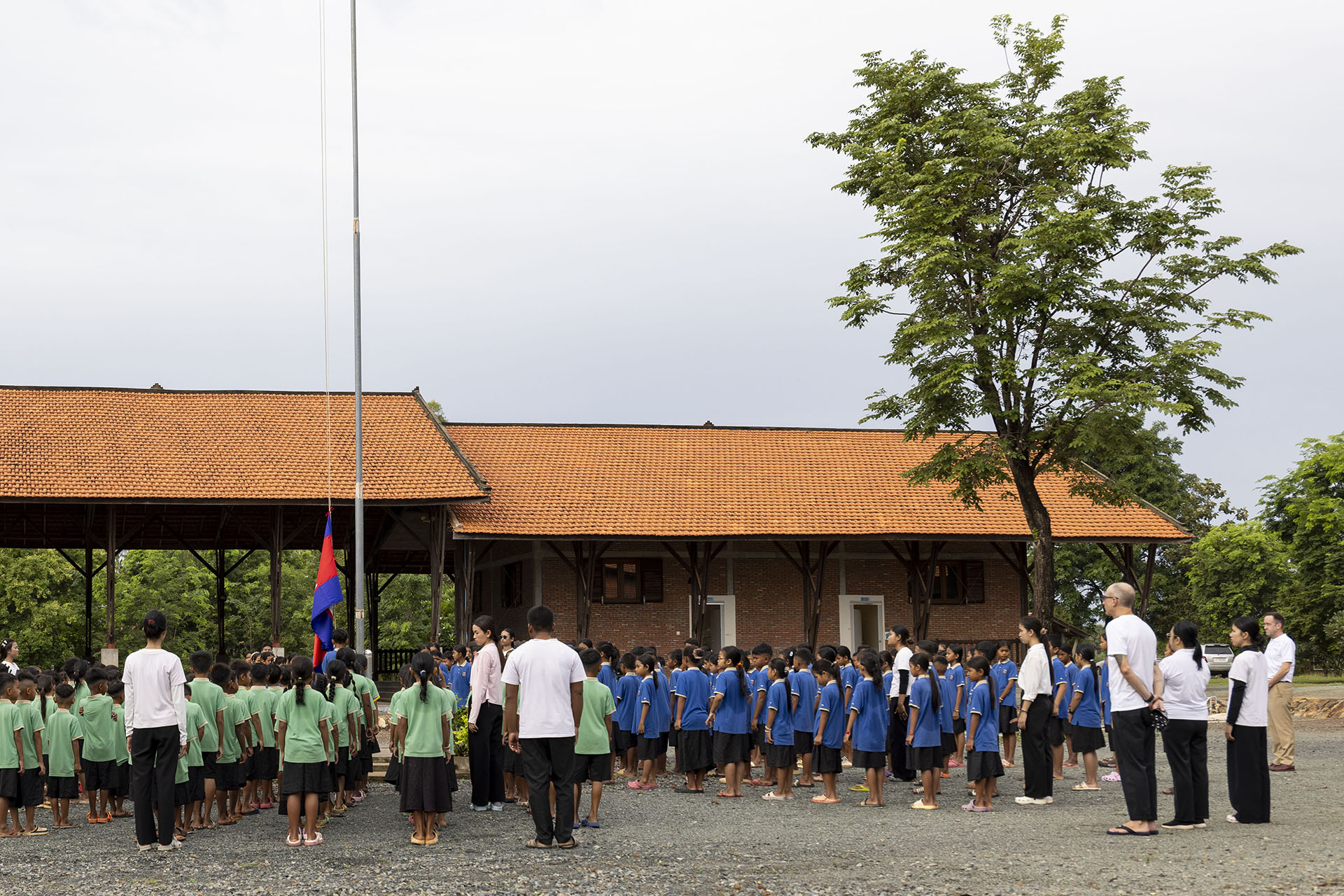
Really good. The school got off to a very smooth start, which is largely down to the middle management and the staff, who went the extra mile. We had a great induction week with the entire teaching staff, including training sessions and a group outing at the end, where staff from different countries were able to get to know one another and chat. On 10 August, the school year began again for the school and nursery children, and it was a real pleasure for me to see just how delighted these children were to finally be back at school after the holidays.
You live on campus with your wife. What’s that like for you both?
Yes, my wife is here with me, and I’m very happy about that. Living and working on a campus like this is as much a lifestyle choice as a career one. This applies not only to us as a couple, but to everyone else who has dedicated themselves to this worthy cause. That’s why the well-being of the whole team is so important to me. Fostering this sense of well-being will be one of my most important tasks. Richard Branson said, ‘Take care of your staff, and they’ll take care of your business.’ I’ve adapted it for myself to ‘take care of the people who take care of the business.’
What has surprised you the most since you arrived?
The size and organisation of the entire Smiling Gecko operation. Many NGOs in Cambodia are comparatively basic. What has been built up here over the years in terms of scale, ambition and implementation has far exceeded my expectations. I’ve also seen how many people across the whole campus, from HR to the joinery workshop, pitch in to help the school.
Most recently, you were headteacher at a school in India, but you’ve also worked in Cambodia, at the Jay Pritzker Academy in Siem Reap. What shaped you during your time there?
That was my first time as a headteacher, over twenty years ago. I helped build the school from the ground up and led it for six years, from conception to completion. There’s no better way to learn the ropes than to create something from scratch. Today, the Jay Pritzker Academy is one of the most prestigious schools for rural Cambodian children, offering scholarships and excellent university acceptance rates. Having lived in rural Cambodia before, this experience gives me a certain familiarity with the place. Even my limited knowledge of the Khmer language helps. My philosophy is simple: if you can make someone smile, you’ve already won.
What do you consider to be the primary responsibility of a headteacher?
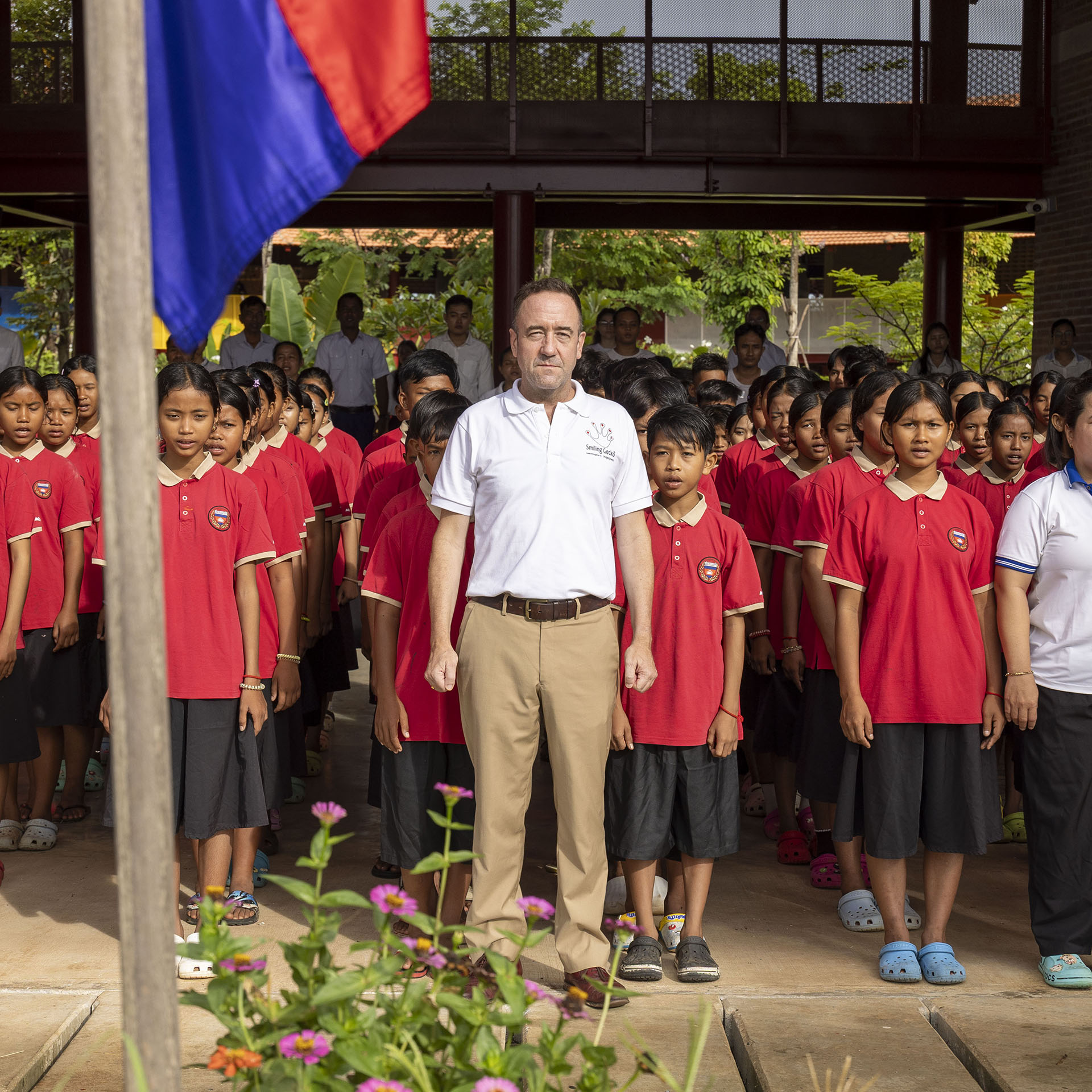
The task is actually quite simple. My goal is to hand this school over to my successor in slightly better condition than when I took over. That’s the whole job. I was educated at the Richard Hale School in Hertford, England, which is over 400 years old. Each headteacher has passed the school on to the next one. This continuity is important. However, improving the school requires change. Without change, there can be no improvement.
What are your priorities for this school year?
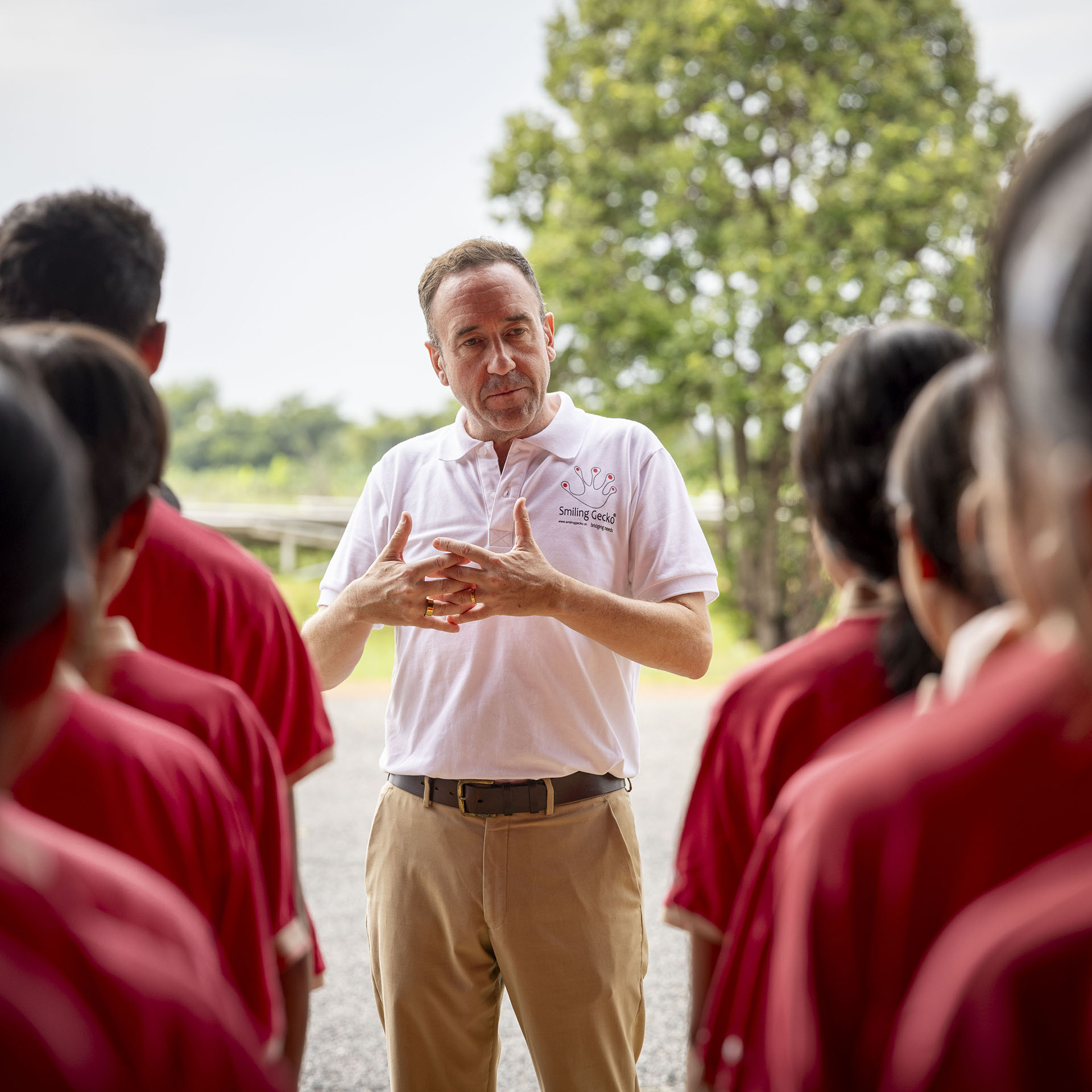
There are three things. Firstly, we need to become more open as a community and develop better relationships beyond the school. Secondly, we need clearer internal organisation and communication. As we are entirely funded by donations, I see it as a great responsibility to ensure that this money is used as effectively as possible. Thirdly, as previously mentioned, we need to focus on staff well-being. My management team, consisting of Ben and Sokheak, are working in parallel on three areas of focus of their own: students motivation, oral expression, and teaching quality.
And the children – what role do they play in your vision?
A bigger one than they’re often given. Recently, a younger student got lost on campus. I didn’t ask adults to help him, but older pupils. They accompanied him to his classroom as a matter of course. You learn responsibility by taking on responsibility. That’s why I’d also like to see a students’ council to represent the children’s interests.
Which brings us to the final and most important question: what colour will the school uniforms be in secondary school?
(laughs). That would be a good first task for a students’ council.